

Rental Car Impounded in Dubai: Causes, Costs and What Happens Next
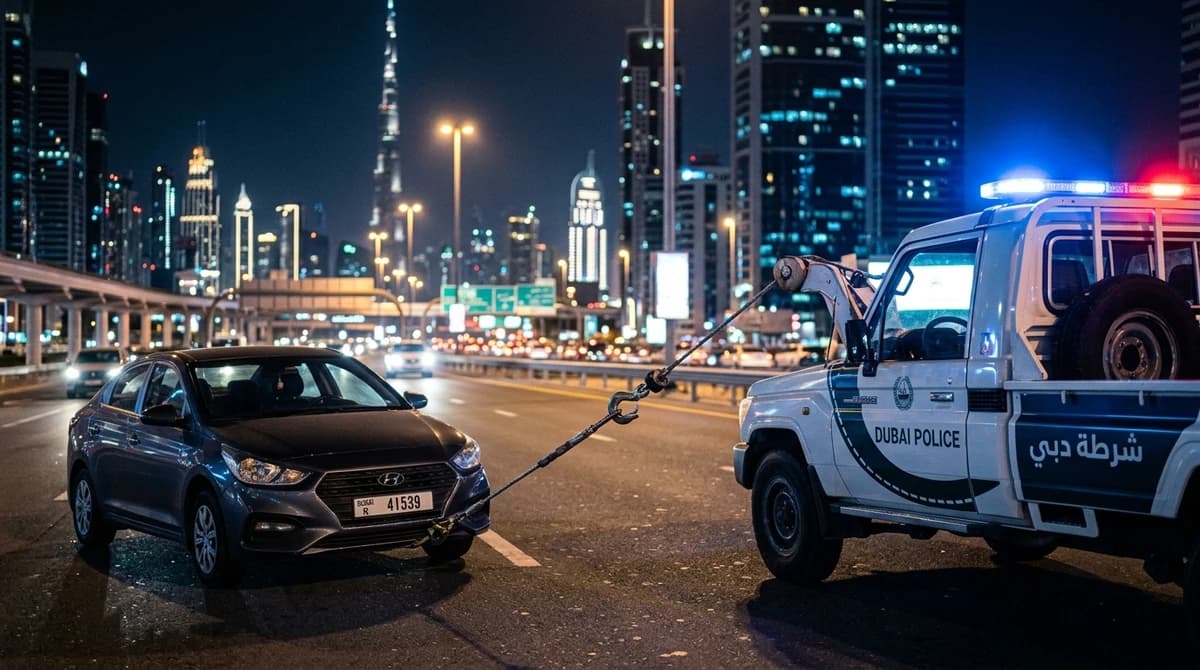
Most of the time, a rental car impounded in Dubai was taken for reckless driving. A drift on Sheikh Zayed Road, a race off the lights in a hired Mustang. The patrol seizes the car on the spot, and getting it out of the yard costs AED 50,000, paid on top of the fine. Drink-driving and jumping a red light are the next two on the list, and neither is cheaper.
This post covers the offences that put a rental car in the yard, what happens to it once the police have it, and what the release costs. Then the part nobody likes: why every dirham lands on the renter.
The offences that put the car in the yard
Dubai runs its own impoundment decree on top of the federal traffic law. The decree is the part that matters, because it fixes the sum you pay to get the car back. Since July 2023, 13 offences carry mandatory impound in the emirate, each with a release amount that sits over and above the traffic fine. The ones a renter can realistically commit fall into three price bands.
- AED 100,000 to release: taking part in a road race without a police permit.
- AED 50,000 to release: reckless driving that endangers life or property, jumping a red light, a fake or covered number plate, or letting anyone under 18 drive.
- AED 10,000 to release: excessive window tint, modifications for speed or noise, driving with no plate, fleeing a patrol, or gathering to watch a race or stunt.
The full list, with the doubling rule for repeat offences, is in Dubai's vehicle impoundment decree on the Dubai Legislation Portal.
The red light is the one that worries ordinary drivers. Dubai Police look at each case. A camera catching you a fraction late at an amber usually ends as the AED 1,000 fine and 12 black points. Driving through a light that's been red for a while, or doing it in front of a patrol, is what puts the car in the yard.
Two more routes into the yard carry no fixed release sum. A car with more than AED 6,000 of unpaid fines on its plate is held until they're paid, which is a fleet problem rather than a renter's. And drink or drug driving is a criminal matter under the federal law in force since March 2025. You're arrested, the car is seized, and a court sets the fine at AED 20,000 to 100,000 for alcohol and AED 30,000 to 200,000 for drugs. The impound period quoted for it is 60 days. Driving without a valid licence sits in the same criminal bracket, at AED 5,000 to 50,000 and up to three months in jail.
What happens once the police have the car
The officer seizes the car at the roadside, or a recovery truck takes it from the scene if you've been arrested. It goes to a Dubai Police impound yard, and the seizure paperwork names which one. Photograph that paper. You'll be asked for the case number several times over.
The notice goes to the registered owner, and for a rental that's the company, not you. It shows up on the company's traffic file, so we usually know within a day whether or not the renter has called. Call anyway, on the 24/7 line, and tell the desk what the police told you. The police report from the stop is the document the whole release runs on.
Getting the car out is the owner's job, because the owner holds the registration card the release form is issued against. The company applies through Dubai Police's vehicle release service, and three things have to be cleared first. The fine itself. The release amount for the offence. And the Dubai Police service fee of AED 400, plus AED 20 in knowledge and innovation fees. Pay all three and the release form follows.
The pay-per-day buyout, AED 100 a day for a light vehicle, does exist in Dubai. But it covers the smaller discretionary impounds like expired registration or bald tyres, and the 13 offences above have their fixed sums instead. If the case is criminal, the release also waits on the prosecution. Nothing moves until the file is closed, and the 60 days runs while it isn't.
Leave the car in the yard after the impound period has ended and Dubai Police charge AED 50 a day for storage.
What the bill comes to
Take a red light in a Geely Coolray at AED 109 a day. The fine is AED 1,000. The release amount is AED 50,000. The service fees are AED 420. Add the recovery from the yard and the rental days the car spent there. The smallest impound most renters face is a five-figure bill on a car that rents for AED 109.
Reckless driving is the same shape with an AED 2,000 fine and 23 black points. Repeat any of the 13 within a year and the release amount doubles, to a ceiling of AED 200,000.
Drink-driving is the expensive one because a court, not a counter, sets the fine. AED 20,000 to 100,000, up to 60 days with the car in the yard, a licence suspension of at least three months, and jail is on the table. The drink-driving law in Dubai has no tolerance level to argue over. Even the AED 10,000 cases, tint and a missing plate, cost more than most people's whole rental.
What it means for your rental agreement
Two things happen to the agreement, and the second is the one that hurts.
First, the offence is a breach. Racing, drink-driving, a driver who isn't on the agreement, off-road use and negligence all void the included insurance on our cars. Most agreements in the city carry the same list. From the moment of the offence you're driving uninsured, so any damage to the car at the scene is yours in full. There's no excess cap on a voided policy.
Second, the agreement carries the costs. Bintali publishes no separate impound policy, and nor do most companies, because the agreement already covers it. The renter carries every cost the offence generated. That's the fine at the Dubai Police amount, with nothing added on our statements. It's the release amount, the service fees and the recovery from the yard. And it's the rental days the car sat there, which the agreement treats as yours.
The deposit goes first. The security deposit on most of our cars is a hold of around AED 1,500, released 15 to 25 days after the car comes back, or applied to the bill. Against AED 50,000 it barely registers. The balance goes to the card on file under the charges clause you signed, and a company will pursue it. With a criminal case open you'll be asked to stay in the country until the prosecution closes the file. The bill and the court date tend to get settled together.
None of this is a reason to worry about a normal rental. Drive at the limit, stop at the lights, and the worst that arrives is a fine on a rental car a few weeks later. The rest of what goes wrong mid-rental, from a flat to a crash, is in our guide to rental car problems in Dubai. And if you're still choosing, every car on our booking page shows its daily rate and deposit before you commit.
FAQ — Common Questions Answered.
Why would a rental car be impounded in Dubai?
For the same offences that get any car impounded, because the police seize the plate, not the driver. Reckless driving, jumping a red light, racing, excessive tint, a missing or covered plate and fleeing a patrol each carry a fixed release sum under Dubai's impoundment decree. Drink or drug driving and driving without a valid licence put the car in the yard too, and those come with a court date. Unpaid fines over AED 6,000 can trigger an impound as well, but on a rental that's the company's file to keep clean, not yours.
How much does it cost to release an impounded rental car?
Three sums, and you pay all of them. The traffic fine for the offence. The release amount fixed by the decree, at AED 10,000, 50,000 or 100,000 depending on what you did. And the Dubai Police service fee of AED 420. If the car stays in the yard past the impound period, storage runs at AED 50 a day on top. The rental company adds the recovery from the yard and the rental days the car couldn't earn. The whole bill comes out of your deposit first and your card second.
Do I pay for the days the rental car sits in the yard?
Yes. The car is off the road because of something you did, and every agreement we've seen treats those days as the renter's. On a mandatory impound the company can't collect the car until the fine, the release amount and the fees are all paid. The quickest way to stop the days piling up is to settle with the company on the day of the seizure. On a criminal case the car waits for the prosecution regardless, and the 60 days is the floor rather than the ceiling.