

Salik Charges on a Rental Car in Dubai: 2026 Rates, Gates and How to Check Your Bill
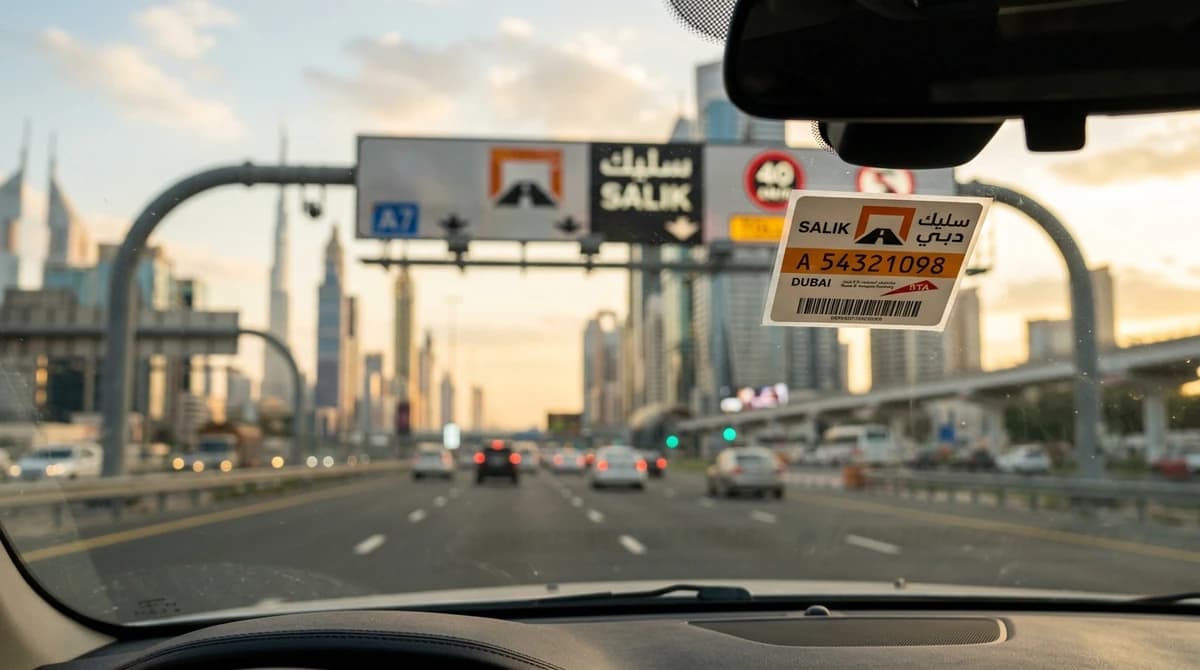
A Salik gate costs AED 6.30 at peak, AED 4.20 off peak, and nothing between 1am and 6am. Those are the figures on the rental car you drive, because the tag on the windscreen is the same tag every Dubai driver uses. The company pays Salik, then passes the crossings on to you.
That's the whole system in three sentences, but it leaves out the parts people ask about at the desk. Which hours count as peak, where the ten gates sit, and whether Salik charges on a rental car in Dubai come at cost or with a fee on top. Then how to read the statement when the deposit comes back a bit lighter than you expected. This post takes them in that order.
What a crossing costs in 2026
The rate depends on the minute you pass under the gantry, not when you set off. Since 31 January 2025 Salik has run variable pricing, and since 1 June 2026 it has added 5% VAT to every crossing. So the numbers on your statement are:
- Peak, 6am to 10am and 4pm to 8pm: AED 6.30 per crossing
- Off peak, 10am to 4pm and 8pm to 1am: AED 4.20 per crossing
- Late night, 1am to 6am: free, every day of the week
- Sundays: AED 4.20 all day, with the free window still applying
Two things trip people up. First, the Sunday flat rate doesn't apply on public holidays or during major events, when the normal peak hours come back. Eid weekends are the usual surprise. Second, the timings shift during Ramadan, so if your rental falls in that month, check the published hours rather than assuming the ones above.
The one rule that works in your favour: pass Al Safa North and Al Safa South in the same direction within an hour and you pay once, not twice. The same applies to the Al Mamzar pair on the Sharjah road. So a run down Sheikh Zayed Road from Downtown to Ibn Battuta is three charges, not four.
For a real number, the drive from DXB to Dubai Marina on Sheikh Zayed Road usually crosses Al Garhoud Bridge, Al Safa and Al Barsha. That's AED 12.60 if you land mid-afternoon and AED 18.90 if you land at 8am. A week of tourist driving, with a day trip or two, typically comes to AED 60 to 120. The National's report on VAT on Salik tolls has the official wording if you want it.
Where the ten gates are
Dubai has ten gates. Seven of them sit on Sheikh Zayed Road or the Creek crossings, which is why most visitors hit the same three or four again and again. The list below is the one to check your statement against.
| Gate | Road | What it sits between |
|---|---|---|
| Al Garhoud Bridge | Al Garhoud Bridge over the Creek | Deira and Bur Dubai, on the airport side |
| Al Maktoum Bridge | Al Maktoum Bridge over the Creek | Deira and Bur Dubai, nearer the city centre |
| Airport Tunnel | Beirut Street tunnel under the runway | Deira and the Al Rashidiya and Mirdif side of the airport |
| Al Mamzar North | Al Ittihad Road | Dubai and Sharjah, northern gantry |
| Al Mamzar South | Al Ittihad Road | Dubai and Sharjah, southern gantry |
| Al Safa North | Sheikh Zayed Road | Interchange 1 and Interchange 2, near Safa Park |
| Al Safa South | Sheikh Zayed Road | Al Meydan Street and Umm Al Sheif Street |
| Al Barsha | Sheikh Zayed Road | Interchange 4 and Interchange 5, at Mall of the Emirates |
| Jebel Ali | Sheikh Zayed Road | Interchange 6 and Interchange 7, near Ibn Battuta Mall |
| Business Bay Crossing | Al Khail Road bridge over the Creek | Al Jaddaf and the Business Bay side of the Creek |
The last two in the table, Al Safa South and Business Bay Crossing, went live in November 2024, and a lot of older guides still list eight. If a statement shows a Business Bay Crossing charge and you thought Al Khail Road was free, that's why. Abu Dhabi runs its own system, Darb, on the bridges into the city, and those crossings come through to your rental bill the same way.
How the toll reaches your bill
Every rental car in Dubai carries a Salik tag registered to the company's account. There's no top-up for you to do and no way to opt out. Each crossing is debited from the company's Salik balance within hours, and it shows up on their portal with the gate, the date and the time to the minute.
What happens next is where companies differ, and it's the one thing to ask before you book.
At cost, or with a fee on top
Some companies pass the toll through at the Salik rate. Others add an administration fee, a dirham or two per crossing at the low end and AED 20 to 30 per item at the high end. On a fortnight with thirty crossings, that second version turns AED 150 of tolls into a bill several times the size. It's usually in the terms, but it rarely gets mentioned at the desk.
We charge Salik at cost. Each crossing goes on the statement at the AED 4.20 or AED 6.30 Salik took from us, with nothing added. The same goes for traffic fines, which we pass on at the amount Dubai Police issued.
When it's taken
Tolls settle in one of two ways. Either they're deducted from the security deposit before it's released, or they're billed to the card on file after the car comes back. Ours works either way, depending on how you paid. If you took the no-deposit option, the crossings go to your card. If you left the standard hold, they come off it before the balance is released 15 to 25 days after return. That wait isn't about Salik, which posts fast. It's the window for any traffic fine to register, and Salik simply rides along with it.
For the whole picture beyond the daily rate, the rental costs guide puts tolls next to fuel, deposit and insurance.
Can you avoid the gates?
Sometimes, and it's rarely worth the effort. Sheikh Zayed Road is tolled at four points. Al Khail Road runs parallel to it from Business Bay to Jebel Ali with no gate at all, and so does Emirates Road further out. For a Marina to Downtown commute, Al Khail saves you Al Barsha and Al Safa each way. That's roughly AED 8 to 13 a day, paid for with a few extra minutes and a less direct exit.
Across the Creek, the Infinity Bridge at Shindagha and the Floating Bridge are still free, while Garhoud, Maktoum and Business Bay Crossing are not. In the middle of the day the Infinity Bridge is a real alternative. At rush hour it's a queue, and the AED 4.20 you saved buys you twenty minutes in traffic.
Drive the direct route and treat the toll as part of the fuel bill. The exception is the free window. If you're driving to the airport for a 4am flight, or back from Abu Dhabi after midnight, you'll pay nothing at all, and that's a reasonable thing to plan around.
Checking the statement and disputing a charge
Because the tag is on the company's account, you can't log into the Salik app and see your own trips the way a resident would. The statement has to come from the rental company, so ask for it in the right form.
What to ask for
A proper Salik statement lists each crossing with the gate name, the date and the time, and the amount for that crossing. A single line reading "Salik AED 84" isn't a statement, it's a total. Ask for the itemised version. Ours comes that way by default, alongside any fines, parking or fuel difference, each on its own line at cost.
Then check three things. The times should fall inside your rental period, from the moment you took the keys to the moment you handed them back. The rate should match the hour: AED 6.30 only in the weekday peak windows, AED 4.20 otherwise, and nothing between 1am and 6am. And a crossing of both Al Safa gates within an hour, in the same direction, should appear as one charge. Keep a rough log of your long drives and a stray crossing stands out in a minute.
When a charge looks wrong
Most disputes are simpler than they look. The common one is a crossing timed just before you collected the car or just after you returned it. That belongs to the previous or next driver and should come off your bill. Another is a doubled Al Safa or Al Mamzar charge inside the hour. Raise either with the company first, with the line and the time you're querying.
If the company believes Salik itself charged wrongly, they raise it, since the account is theirs. Salik disputes are free, go through the app or the call centre on 800 72545, and come back with a reference number by SMS. Give the company the crossing details and let them run it. When you're paying at cost, there's no reason on their side to leave a wrong charge standing.
Get the itemised statement, check the times against the rates above, and Salik on a rental is about as predictable as a bill gets. If you're still choosing a car, every rental car in Dubai we list carries a tag, and the tolls come through at exactly what Salik charged.
FAQ — Common Questions Answered.
Is Salik included in the rental price?
No, with almost every company in Dubai. The daily rate covers the car, insurance and the kilometre allowance, and the crossings you make are added afterwards. A few companies sell a flat daily Salik package, which only makes sense if you plan to cross five or six gates a day. For a normal tourist week, paying per crossing is cheaper. Ask before you book if the answer isn't on the site.
How much does Salik cost per day on a rental car?
It depends on your route rather than the car. A day in Marina and JBR might be zero. A trip from Downtown to Ibn Battuta and back at peak hours is AED 37.80. Most visitors driving across the city once or twice a day land somewhere between AED 8 and 25. Over a week that's typically AED 60 to 120, which is the figure to keep in mind when you compare rental quotes.
Do rental companies add a fee on top of Salik?
Some do and some don't. The ones that do add anywhere from a dirham or two to AED 20 to 30 per crossing, and the same kind of fee on fines. It's in the terms, so read the section on tolls and fines before you pay. With us the crossing goes on your statement at the amount Salik charged, with no administration fee, and the statement is itemised so you can see each one.
Can I see my Salik trips myself?
Not directly. The tag belongs to the rental company, so the trips appear in their Salik account, not one you can log into. What you can do is ask for the itemised statement, which shows every crossing with gate, date and time, and check it against the rates and the rules above. If you want to track as you go, keep a note of the gates you pass on long drives, and the total will rarely surprise you.