

Can You Take a Rental Car from Dubai to Oman? NOC, Insurance, Borders
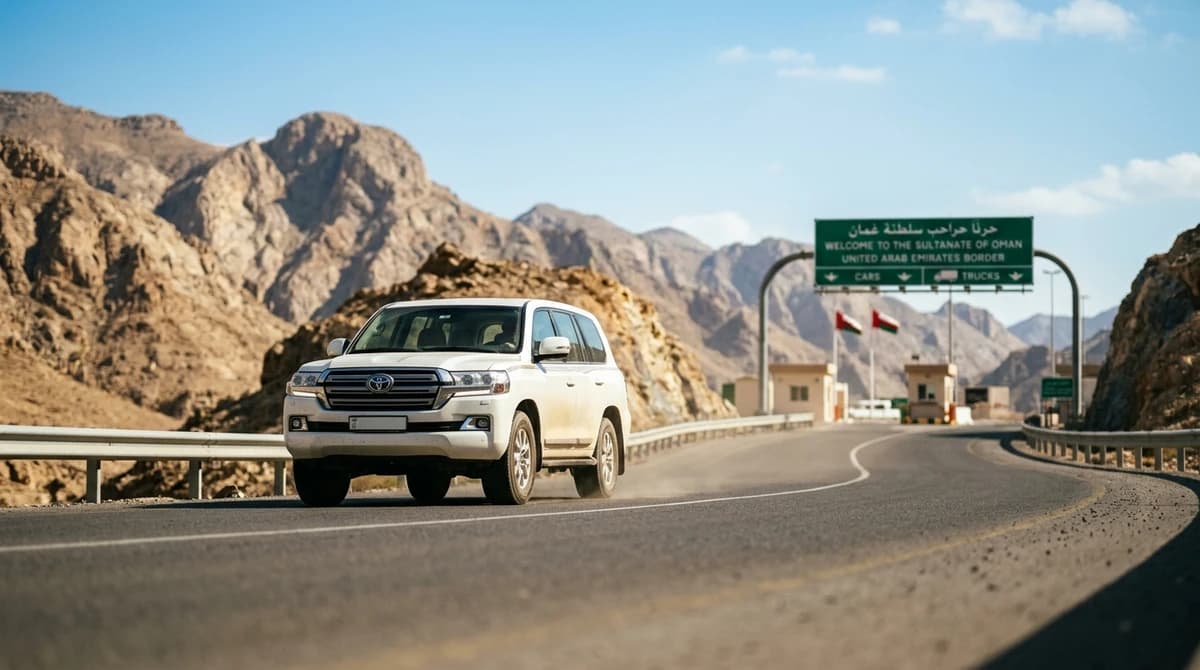
Sometimes, and never by default. Taking a rental car from Dubai to Oman works only when the rental company has approved the trip in writing and the car carries insurance that's valid in Oman. Most Dubai bookings come with neither. This post covers how to get both, which border post suits Muscat and which suits Musandam, what the crossing costs, and what happens if you go without the paperwork. If you'd rather skip all of it, the last section covers how to see Musandam without the car ever leaving the UAE.
Where things stand in 2026
Most Dubai rental companies say no, full stop. Most of the big international desks at the airport don't let their cars across the border at all. A handful of companies will let you go with a No Objection Certificate, Oman cover and a cross-border fee. As a market range, that fee runs around AED 450 to 750 for up to a week, with one to three days' notice. Some of those companies only permit the Al Ain crossings, not Hatta. One Dubai company states on its site that the borders have been effectively closed to rental cars since late 2024 after a run of thefts. We can't confirm that as a rule rather than a policy, but it's a fair sign of how unsettled this is.
Our own position is the one on our terms. Oman needs written approval from us plus an Oman insurance extension arranged before you leave. Without that approval you're driving uninsured from the moment you clear the post, and in breach of the agreement. We don't publish a fixed Oman fee or a list of eligible cars, because it's decided case by case with the insurer. So ask before you book, and get the answer in writing. A verbal yes from whoever answered the phone doesn't get you through Al Wajajah.
What the border asks for: the NOC and the mulkiya
Two documents for the car, on top of your own passport and licence.
The mulkiya is the vehicle registration card, and it has to be in the car. It names the registered owner, which for a rental is the company, not you. That's the whole reason the second document exists.
The No Objection Certificate is a letter from that registered owner saying the car may leave the UAE, with the plate number, your name and passport details, and the dates. The Omani post asks for it whenever the driver and the owner on the mulkiya are different people, and a rental car always fails that test. Companies that allow Oman issue it themselves, usually on letterhead with a stamp, and some posts want it in Arabic or attested. Get it printed. A photo on your phone has been refused at Hatta more than once.
If your licence needed an International Driving Permit to rent the car in the first place, carry that too. Oman recognises the same permit.
Insurance once you're past the post
Every UAE motor policy stops at the border. The included insurance on a rental covers the car and third parties in all seven emirates, and nowhere else, unless the insurer adds Oman to it. That addition is the extension we arrange in advance, and it's the part people skip because the border sells something that looks like the same thing.
What the border sells is Omani third-party cover, the orange card. It's a separate policy that pays for the other car and the other people if you're at fault in Oman. It does nothing for the car you're driving. Market price is about AED 100 to 115 for a five-day minimum, paid at a counter or a machine on the Oman side. For a private car whose insurer has already extended the policy, it's often free. For a rental it's the legal minimum to drive in Oman, and it still leaves the company's car uninsured against damage. That's why the company's own extension comes first.
Which border to use
Four crossings matter for a Dubai rental. Hours change, and the 24-hour operation reported at the main posts is something to check the week you travel.
Hatta to Al Wajajah, for Muscat
The Hatta road from Dubai ends at the Al Wajajah post (take the Sharjah to Kalba road and the Shawka turn, not the old E44 through Al Madam, which itself crosses Omani territory). It's the direct route to Muscat, about 450 km and four to five hours from Dubai including the crossing. This post takes tourists, residents and GCC nationals. It's also the one rental companies most often exclude even when they allow Oman, so an NOC that's valid at Mezyad may be worthless here. Read the NOC for the named crossing before you set off. The drive to Hatta itself needs no paperwork, since Hatta is Dubai.
Al Darah, for Musandam and Khasab
Take the E11 north through Ras Al Khaimah to the Al Darah post at the tip of the emirate, with Tibat on the Omani side. Dubai to Khasab is about 200 km and three and a half hours with the border included, and the last 45 minutes is the coast road through Bukha. This is the crossing for Musandam. And Musandam is an exclave, so the trip is a full exit from the UAE and a re-entry on the way back. You pay the exit fee both times, and a second visa if yours is single entry.
Mezyad, from Al Ain
The E40 to Al Ain and the Mezyad post, with Hafeet on the Omani side, heads towards Ibri, Nizwa and the road south. It's the crossing the rental companies that allow Oman tend to insist on, so if you've been given an NOC it may name this one. Add an hour and a half over the Hatta route for Muscat.
Khatmat Malaha, from the east coast
From Kalba and Fujairah the E99 leads to Khatmat Malaha and the coast road down to Sohar and Muscat. Useful if you're already on the east coast, but drivers have reported rental cars being turned back here even with paperwork. If this is your plan, confirm it with the company as a named crossing.
What it costs on the day
The UAE charges an exit fee of AED 35 per person at land borders, paid by card at the post. Oman's side depends on who you are. GCC nationals cross on their ID. UAE residents whose Emirates ID profession is on Oman's approved list get a visa on arrival or a GCC-resident e-visa for OMR 5, about AED 48. Citizens of 103 countries, including the UK, most of Europe, the USA, Canada and Australia, get 14 days visa-free with a hotel booking, a return plan and health insurance. Everyone else applies for the tourist e-visa before travelling, OMR 5 to 20 depending on length, and should allow a few working days. The Royal Oman Police e-visa site has an eligibility check by nationality and residence.
So for two residents in a rental with everything approved, the border costs about AED 270. That's AED 70 in exit fees, around AED 100 of orange card and roughly AED 100 in visas, on top of the company's cross-border fee. Double the border charges for a Musandam trip if you're coming back the same way on single-entry visas. Fuel is cheaper in Oman, which softens it slightly. Gulf News keeps a current border guide for drivers with the latest fee figures.
Why most companies say no
It isn't obstinacy. Three practical problems sit behind the refusal.
The first is recovery. A breakdown line and a replacement car work across the seven emirates. Neither exists in Oman, so a flat battery in Nizwa is a tow at your expense and a car the company can't get back for days.
The second is the insurance and the registration. The car is insured and registered in the UAE, and the UAE policy stops at the post. The insurer has to agree to cover a specific car in Oman for specific dates, and many won't for a rental fleet.
The third is theft. Rental cars have been driven across and never come back, sold on or stripped, sometimes with the tracker disabled first. That's the reason the fee and the notice period exist at the companies that still allow the trip, and the reason the big desks stopped.
If you cross without approval
The deposit is the least of it. The hold on most rentals is around AED 1,500, and yes, an unauthorised border crossing is a breach that can cost you that. The real exposure is what follows.
From the post onwards the car has no cover. An accident in Oman that's your fault means the full repair bill for the rental car. Without an orange card it also means the other party's damage and injuries, personally, in a foreign jurisdiction. Taking the car out of the country without permission is one of the breaches that void cover, so the excess cap on the agreement no longer applies. The whole repair is yours. And if the car is stolen or written off in Oman, the claim against you is its value.
There's a smaller trap too. The tracker on a rental car tells the company where it is. Crossing without approval is usually noticed the same day, and the polite phone call that follows is the good outcome.
Doing Musandam without taking the car across
For most visitors the point of Oman is Musandam, and Musandam is the one you can do without the paperwork.
The dhow cruises on the fjords run from the Omani side of Dibba, on the east coast. They work on a permit the operator arranges from a passport copy a few days ahead. You don't need a visa or an exit stamp. Most operators collect you in Dubai or from a meeting point in Dibba Al Fujairah. The rental car stays in the UAE and the day still ends with the dolphins.
If it's Khasab and the coast road you want, the same operators run Khasab tours from the Al Darah side. You can also cross on foot at Al Darah and take a taxi. A third option is a car rented in Oman, picked up in Muscat or Sohar, with the flight or the bus in between.
If a Bintali car is coming with you, the sequence is short. Ask us before you book. Get the written approval and the Oman extension arranged for your dates. Carry the NOC and the mulkiya, buy the orange card at the post, and cross at the border named on the approval. If it's a mountain day you're after rather than a border, Jebel Jais gives you the same Hajar limestone with none of the stamps. Every car in our Dubai listings shows its rate and mileage allowance. The other routes that stay inside the UAE are in our guide to road trips from Dubai.
FAQ — Common Questions Answered.
Is it allowed to take a rental car from Dubai to Oman?
Only with the rental company's written approval and insurance that covers Oman, and most Dubai bookings include neither. The big international brands refuse outright. A few local and franchise companies allow it with a No Objection Certificate, an Oman insurance extension and a cross-border fee, often limited to named border posts. With us, ask before you book and get the answer in writing, because a car that crosses without approval is uninsured and in breach of the agreement.
What is the NOC for driving to Oman?
The NOC is a No Objection Certificate, a letter from the car's registered owner saying it may leave the UAE. For a rental the owner is the rental company, so only the company can issue it. It carries the plate number, your name and passport details and the dates of the trip. The Omani border post asks for it alongside the mulkiya, the registration card, whenever the driver isn't the owner named on that card. Carry a printed original rather than a photo, and check whether it names a specific crossing.
Which border should I use from Dubai?
Hatta to Al Wajajah for Muscat, about 450 km and four to five hours. Al Darah in Ras Al Khaimah for Musandam and Khasab, about 200 km and three and a half hours including the border. Mezyad from Al Ain is the one rental companies that allow Oman most often specify, and Khatmat Malaha serves the east coast route to Sohar. Use whichever crossing the approval names, since an NOC valid at one can be refused at another.